
St. Mary’s College Rushoroza students develop “Deglecy,” an AI-powered learning platform designed to make quality education accessible for every Ugandan learner.
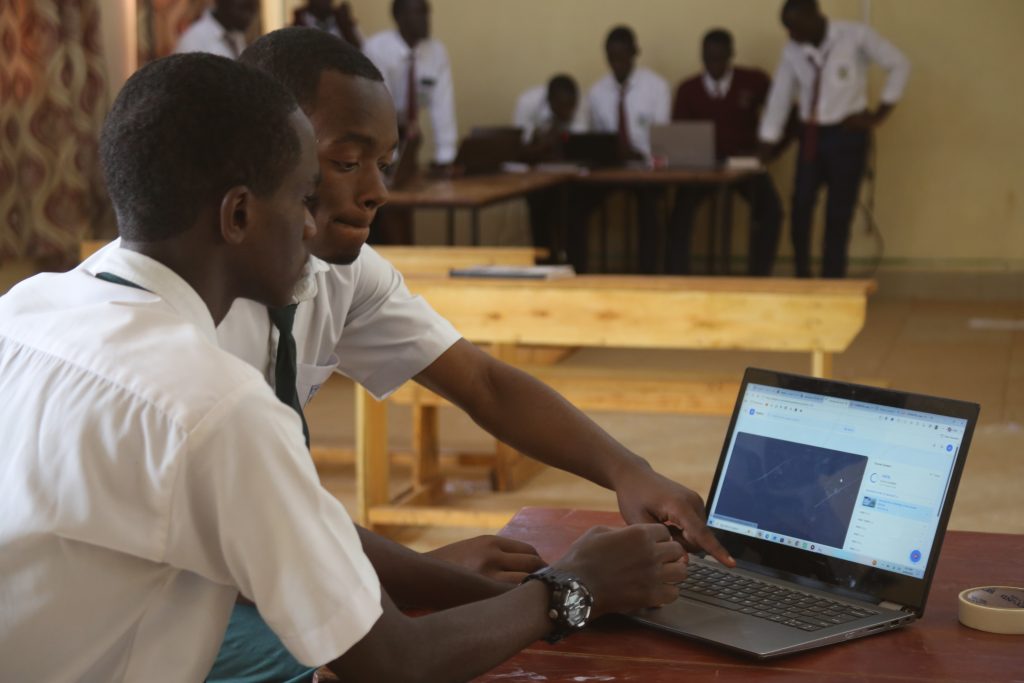
KABALE — When schools across Uganda closed during the COVID-19 pandemic, millions of learners were left without classrooms, teachers and learning materials. While many students waited for schools to reopen, two teenagers in Kabale saw an opportunity to solve a problem that continues to affect education today.
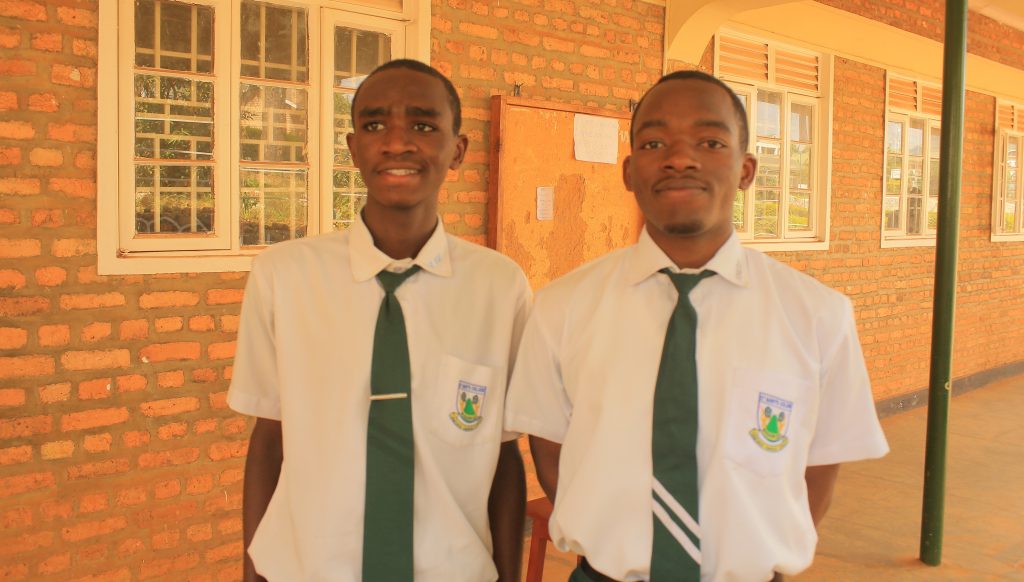
At just 18 years old, Agaba Samuel and Ibzan Johanan Kanyesigye, Senior Four students at St. Mary’s College Rushoroza, have developed Deglecy, an artificial intelligence-powered personalized learning platform that is changing how students learn beyond the classroom.
Unlike conventional AI applications that simply provide answers, Deglecy acts as a virtual teacher. The platform first assesses a learner’s level of understanding before explaining concepts in simple language, asking follow-up questions, generating exercises, marking quizzes and tracking academic progress. It even recommends subjects and career paths based on a student’s strengths and interests.
“We wanted to create something that teaches rather than just answers questions,” said Agaba. “Our AI interacts with learners like a real teacher, ensuring they understand concepts before moving to the next level.”
The platform offers learning resources for primary, secondary and university students, covering subjects including Biology, Chemistry, Physics, Mathematics and others. Learners can also access past examination papers, downloadable notes and study materials.
Recognizing that internet access remains a challenge in many parts of Uganda, the young innovators built offline functionality into the platform. Students can download learning materials while connected to the internet and continue studying without a connection before reconnecting for AI tutoring and video lessons.
“We know many learners struggle with internet access,” the developers explained. “That’s why we wanted learning to continue even when someone is offline.”
Security was another priority. The platform uses encrypted SSL connections, securely hashes passwords and stores user data in protected databases to ensure the safety of learners and educators.
Agaba credits his journey into technology to the encouragement he received from his family.
“My elder brother introduced me to ICT, and my father bought me my first laptop while I was still in Primary Five. That support encouraged me to teach myself web development before progressing into software programming,” he said.
Although still in secondary school, the pair have already attracted about 200 users, mainly in Uganda, while also reaching learners in the United States, India, Malaysia and China.
Their innovation recently received national recognition after emerging overall winner in the ICT category during the Kigezi regional STEM and SESEMAT science competitions, scoring an impressive 85 out of 100 against several engineering projects.
The victory also marked their first commercial success.
“We earned our first Shs30,000 after demonstrating the platform,” Agaba recalled. “It wasn’t a lot of money, but it proved that people believed in our idea.”
For co-founder Ibzan Johanna Kanyesigye, Deglecy represents more than a school project—it is a vision for Uganda’s technological future.
“We want to build a world-class education platform developed by Ugandans for Ugandans. Our country has talented young people who can create solutions that compete globally.”
The students are now appealing for government support, investment and partnerships with schools to expand the platform and improve internet accessibility across the country.
Their innovation has already won admiration from educators.
Deputy Head Teacher for Academics at St. Mary’s College Rushoroza, Godfrey Barigye, admitted that the school initially underestimated the project.
“When they first presented the idea, we thought they were joking. But after seeing the demonstration, we realized they had created something extraordinary. Their work perfectly reflects the practical competencies promoted under Uganda’s new lower secondary curriculum.”
He added that the school continues to encourage innovation by providing internet access and creating time for students to work on practical projects, while parents have supported them with laptops.
The Kigezi Regional SESEMAT Coordinator, Agnes Tumuhaise, described Deglecy as the region’s most outstanding innovation during the science competitions held on June 13 in Kabale.
“This project emerged as the best creativity innovation in the region. The students have demonstrated exceptional talent through ICT, and we are confident they will make Kigezi proud during the national competitions.”
The team will represent Kigezi at the national STEM and SESEMAT science competitions scheduled for July 10–12 in Kampala.
Tumuhaise urged government, development partners and well-wishers to support the project, noting that maintaining and expanding an online learning platform requires significant resources.
“With adequate support, this innovation has the potential to transform education across Uganda while inspiring thousands of young innovators.”
From a simple idea born during a global pandemic to an award-winning AI learning platform, the journey of Samuel and Ibzan is a powerful reminder that innovation knows no age.
As Uganda embraces digital transformation, these two teenagers are proving that the next generation of technological solutions may already be sitting in today’s classrooms.
ENDS////////




