Kolping National Praeses Calls for Embracing Five Pillars
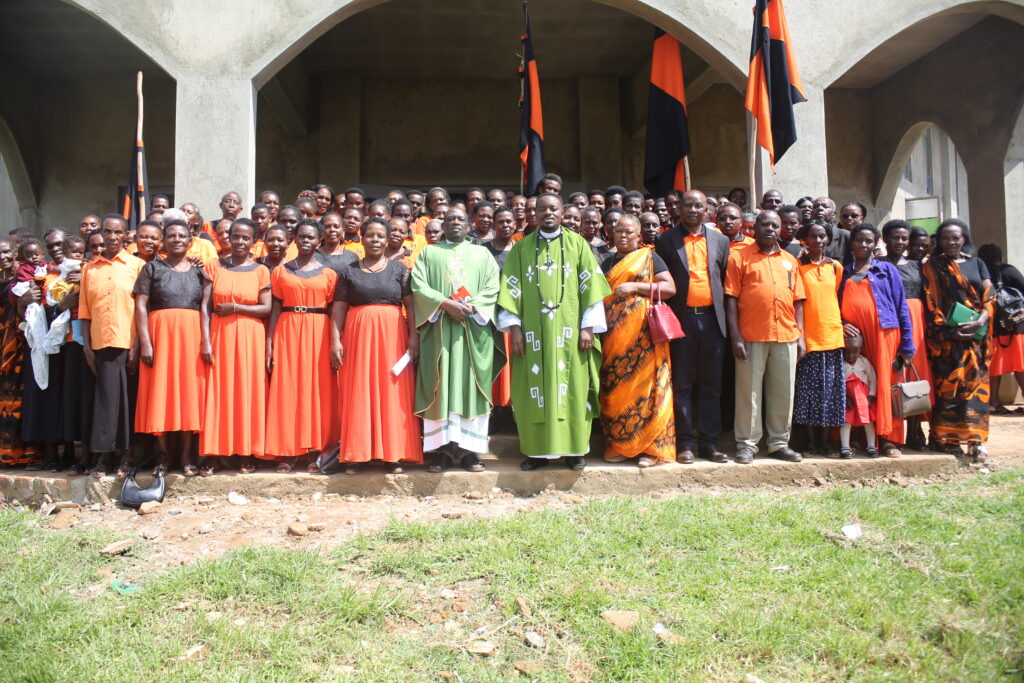
Members of the Kabale Diocesan Kolping Society have been urged to embrace the five pillars of Kolping as a foundation for strengthening Christian values, building strong families, promoting self-reliance and fighting poverty.
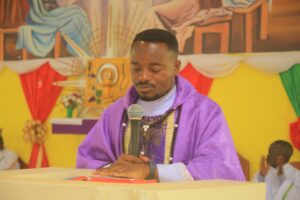
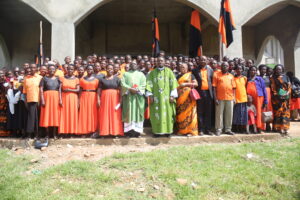
The call was made by Rev. Fr. Alfred Byarugaba, the National Praeses of the Uganda Kolping Society, during a gathering of Kolping members held on Sunday at St. Francis of Assisi Kyanamira Parish.
The members gathered for Holy Mass and discussions on the mission and values of the Kolping movement.
Rev.Fr. Byarugaba encouraged Christians to live according to the five pillars, saying they provide a foundation for personal development, family stability, social responsibility and community transformation.
He outlined the five pillars as society, Church, State and faith; marriage and family; work and profession; culture and recreation; and education and lifelong learning.
On the first pillar, he emphasised the importance of understanding one’s place in society, the Church and the State while remaining guided by faith.
Regarding marriage and family, he noted that every person is born into a family and formed within a family, making it an important institution in shaping responsible individuals and building strong communities.
On work and profession, Fr. Byarugaba highlighted the philosophy of helping people to help themselves while extending a helping hand to others.
He also stressed the importance of culture and recreation in promoting social interaction and preserving community values, while education and lifelong learning remain essential for personal growth.
He said the overall mission of Kolping is to become a leading service provider in helping people overcome poverty through empowerment, self-help and community support.
Speaking during the gathering, Provia Tumushabe, the President of Kabale Diocesan Kolping Society, said Kabale Diocese is among the 17 diocesan Kolping societies that make up the Uganda Kolping Society.
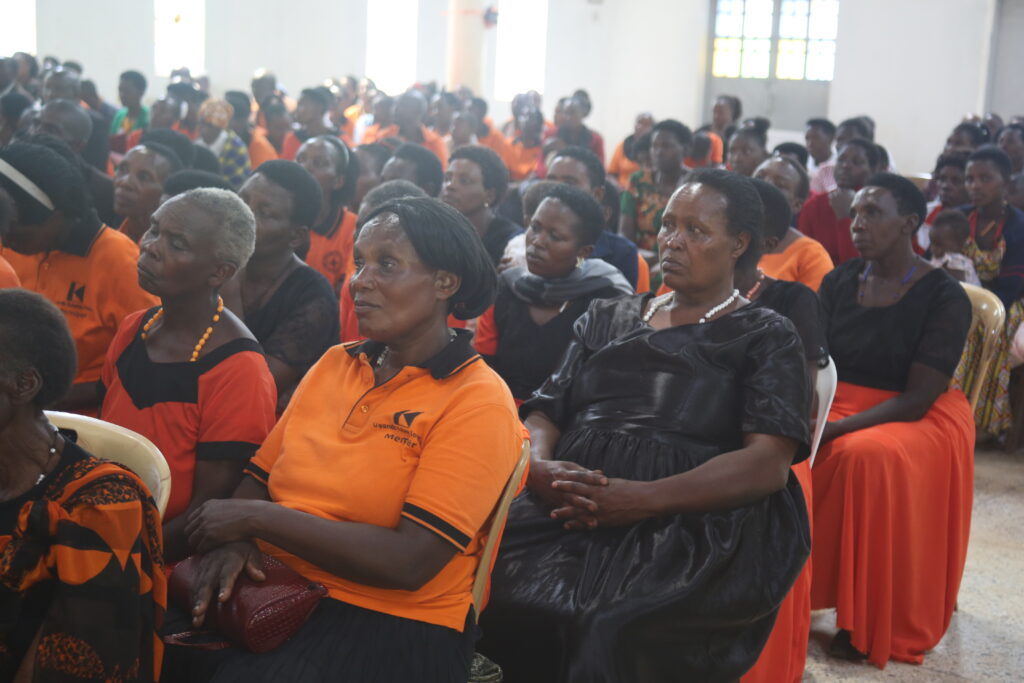
Tumushabe revealed that the Kabale Diocesan Kolping Society has 1,664 members organised into 79 Kolping families drawn from the six districts of the Kigezi region.
She said members come from several parishes, including Maziba, Rwanyena, Buhara, Karujanga, Kyanamira, Makiro, Rutenga, Soko, Mukyahi, Kakore and Nyarushanje, among other parishes across the diocese.
She added that the society continues to bring Christians together through faith, fellowship and community development initiatives aimed at improving people’s livelihoods.
During Sunday’s gathering, members also demonstrated their commitment to supporting the development of the Church by contributing Shs658,300 towards fencing the Parish Priest’s house.
Meanwhile, Rev. Fr. Balthazard Buhalagarha Grace, M.Afr., an Assistant Priest (Curate) at St. Francis of Assisi Kyanamira Parish, urged members to remain united and committed to prayer as they carried out their activities.
He encouraged them to seek the guidance of the Holy Spirit in their work, noting that unity and prayer are essential in building a strong Christian community.
The Legacy of Adolph Kolping
The Kolping movement draws its inspiration from Adolph Kolping, a German Catholic priest whose commitment to empowering disadvantaged people laid the foundation for the international organisation.
Kolping was born in Kerpen, near Cologne, Germany, and grew up in a poor family. After spending a short time in school, he began an apprenticeship as a shoemaker at the age of 13.
He worked as a shoemaker for ten years, travelling from one place to another like other journeymen of his time.
At the age of 23, he decided to pursue priesthood. He attended Marzellen Grammar School in Cologne while earning his own living before proceeding to study theology in Munich and Bonn.
On April 13, 1845, Kolping was ordained a priest at the Church of the Minor Friars in Cologne. His first appointment was in Wuppertal-Elberfeld, where he witnessed the poverty and difficult living conditions of workers caused by industrialisation and social change.
He became concerned about the struggles of young workers and journeymen who had lost the family-based support systems that previously provided them with accommodation and a sense of belonging.
In Elberfeld, he encountered a journeymen’s association founded by teacher Johann Gregor Breuer. Kolping later became its Praeses and recognised the organisation as an effective way of addressing social challenges through solidarity and collective action.
His vision eventually led him to Cologne, where, on May 6, 1849, he founded the first Catholic Journeymen’s Association, which became the foundation of today’s Kolping movement.
His philosophy of ‘help for self-help’ quickly spread across Europe and beyond, inspiring people to overcome poverty, improve their livelihoods and contribute to the well-being of their communities.
Adolph Kolping was beatified in Rome on October 27, 1991. Today, his legacy continues through the international Kolping movement, which operates in more than 50 countries around the world.
As members of the Kabale Diocesan Kolping Society continue to embrace the five pillars, they are encouraged to put the founder’s vision into practice by strengthening families, promoting education, embracing productive work, upholding Christian values and supporting one another in the fight against poverty.
Ends//////////