
Kabale Diocese Champions Inclusive Education, Equips Teachers to Support Deaf Learners Across Kigezi
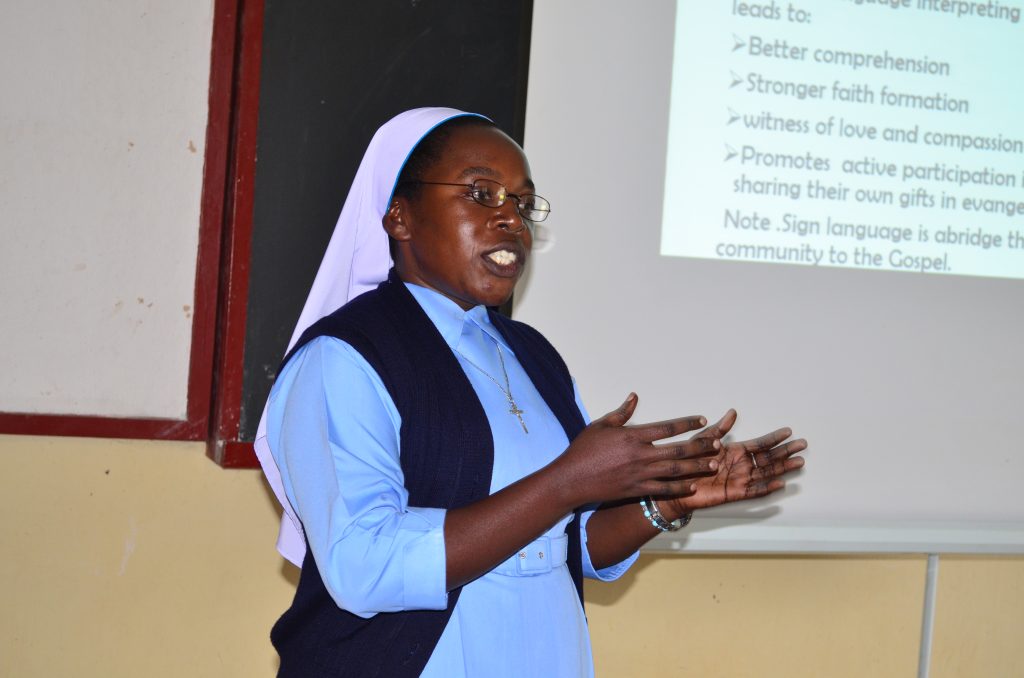
In a bold step toward inclusive education, the Kabale Diocese, in collaboration with the Uganda Catholic Secretariat , today conducted a specialized sign language workshop for headteachers of schools serving learners with hearing impairment across the Kigezi sub-region.
The training, held at the diocesan pastoral centre, aimed to strengthen the capacity of school leaders to better support deaf learners and promote inclusive learning environments.
Speaking during the workshop, Sr. Milly Rose Piloya, National Religious Education Coordinator under the Uganda Catholic Education Department , highlighted the urgent need to expand professional training for teachers handling learners with hearing impairment.
She noted that currently, specialized training for teachers of the deaf is offered only at Kyambogo University, a situation that limits the number of qualified personnel despite a growing population of learners with hearing challenges.
“The number of children with hearing impairment continues to increase, yet opportunities for specialized teacher training remain limited. We must invest more in human resource development to ensure these learners receive quality education,” she said.
Kabale Diocesan Education Secretary, Byamukama Remegio, revealed that the diocese is already supporting inclusive education through targeted interventions. He decorated two institutions—St. Maria Theresa Primary School and Nyakibale Lower Primary School—as key centres where learners with hearing impairment receive specialized attention and support.
He added that the diocese has intensified community sensitization campaigns to encourage parents to identify children with hearing difficulties early and enroll them in appropriate schools.
“Our goal is to ensure that no child is hidden at home because of a disability. Every child deserves a chance to learn and thrive,” Remegio said.
However, he acknowledged several challenges facing the initiative, including the high cost of specialized teacher training, expensive assistive sports equipment, and inadequate infrastructure such as accessible sanitation and learning facilities tailored to the needs of children with disabilities.
Despite these obstacles, the diocese reaffirmed its commitment to promoting inclusive education and improving the learning conditions for children living with hearing impairment.
ENDS//////////////




