Kabale Diocese launches five-year PROMIC strategic plan to tackle poverty in Kigezi
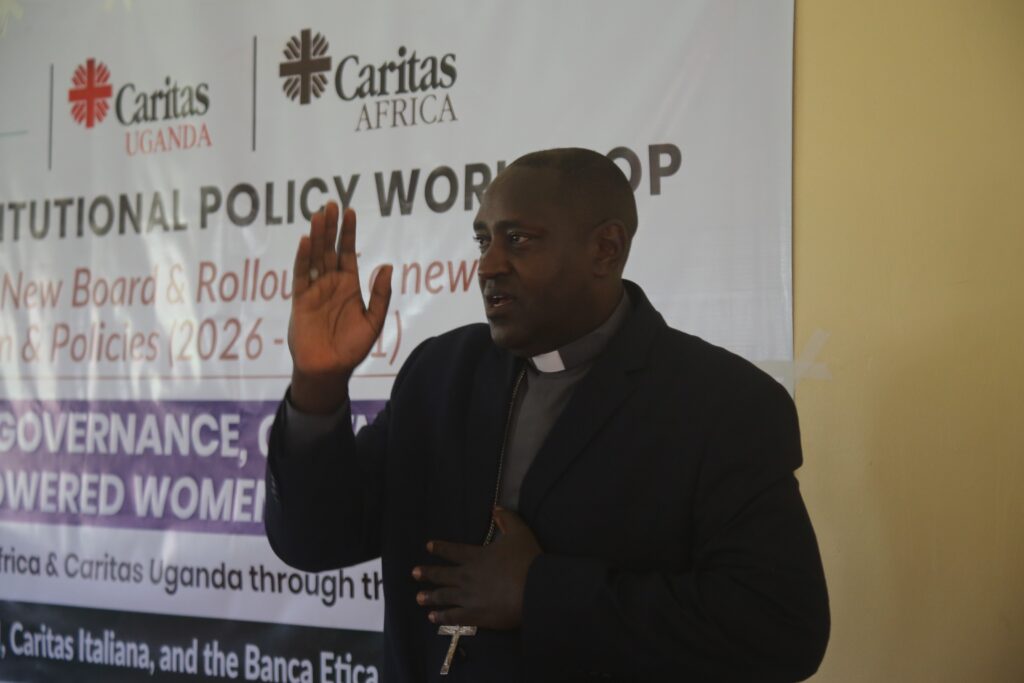
KABALE – Kabale Diocese has launched a five-year strategic plan for PROMIC Kabale Diocese Company Limited, with a renewed commitment to fighting poverty and improving the livelihoods of women and youth across the Kigezi sub-region.
The strategic plan, themed “Strong Governance, Green Finance, Empowered Women and Youth,” is designed to expand access to affordable financial services, promote entrepreneurship and strengthen the economic independence of vulnerable households.
Speaking at the launch, on Friday at the Diocesan Pastoral Centre, the Bishop of Kabale Diocese, Rt. Rev. Dr. Boniventure Bosco Gubazire, said the initiative reflects the Church’s commitment to addressing both the spiritual and socioeconomic needs of communities.
He said evangelisation should not be limited to preaching the Gospel but should also involve practical interventions that enable people to live better lives.
Bishop Gubazire cited the teachings of Jesus Christ about giving people life in abundance, saying the Church must play an active role in transforming communities through development initiatives.
He emphasised the need to extend financial services to grassroots communities, particularly small households that are often overlooked by mainstream financial institutions.
The Bishop said providing affordable loans to rural households would enable them to start small businesses, improve family incomes and become economically self-reliant.
Rev. Fr. Deogratius Tubiheruhanga, Director of PROMIC Kabale Diocese Company Limited, said the institution is adopting a different approach to poverty reduction by combining financial support with business skills training and entrepreneurship education.
He said beneficiaries are trained to identify business opportunities, manage their enterprises and develop sustainable sources of income.
According to Fr. Tubiheruhanga, PROMIC has extended its services to women and youth in the six districts of Kigezi: Kabale, Kisoro, Kanungu, Rubanda, Rukiga and Rukungiri.
He explained that the institution was established to address financial exclusion, particularly among women and young people who are often unable to meet the collateral requirements imposed by commercial banks.
He said some women cannot access loans because they lack personal assets or permission to use family land titles as security.
To overcome this challenge, PROMIC introduced a group-lending model in which members organise themselves into groups that collectively guarantee loans, enabling those without conventional collateral to access financing.
Fr. Tubiheruhanga said the intervention is important in a region that has historically experienced high poverty levels, adding that economic empowerment remains central to the institution’s mission.
He also raised concern over alcohol consumption in Kigezi, linking the problem partly to poverty, unemployment and a lack of meaningful economic activities among some residents.
He said PROMIC intends to keep women and youth engaged in productive activities by helping them establish businesses and generate income to meet their basic needs.
The concern comes amid reported findings in the Uganda Alcohol Status Report 2026, which placed Karamoja as the region with the highest alcohol consumption, followed by Kigezi. The report also reportedly put Uganda’s consumption at 12.2 litres of pure alcohol per person aged 15 and above.
Microfinance changing lives
The impact of PROMIC’s lending programmes is reflected in the experiences of beneficiaries who say access to credit has helped them establish businesses and improve their household welfare.
Tirinomuhangi Beda from Rubanda District said his journey with PROMIC began about ten years ago when he first accessed a loan.
He said he later invested in poultry farming, starting with 100 birds, and has continued growing the enterprise.
Beda currently earns approximately Shs2,000,000 monthly from selling eggs.
He also invested in dairy farming after purchasing a cow worth Shs2.5 million, which has since multiplied to five additional cattle.
He said milk sales provide him with another source of income, while animal manure is used to improve soil fertility in his gardens.
Another beneficiary, Angella Kembabazi from Kirembe Village in Katete Sub-county, Kanungu District, said PROMIC financing has enabled her to expand her agricultural enterprises.
She said she borrowed money to invest in coffee growing and piggery, activities that have helped her pay school fees, improve her household and acquire additional land for farming.
Kembabazi thanked Kabale Diocese for establishing a financial empowerment initiative that gives rural women opportunities to improve their economic circumstances.
Serving communities since 2003
PROMIC Kabale Diocese Company Limited began operations in 2003 under Caritas Kabale Diocese and currently serves approximately 3,000 people across the Kigezi sub-region.
Through the new five-year strategic plan, the institution intends to strengthen its contribution to poverty reduction through accessible credit, financial inclusion, entrepreneurship development and support for women and youth.
The initiative places the Church’s development mission at the centre of efforts to create economically empowered households and sustainable livelihoods in Kigezi.
ENDS////////